Multicolored Asian Lady Beetle (ALB)
Multicolored Asian lady beetle is also known as Halloween lady beetle, Japanese lady beetle, Asian
lady beetle or Asian ladybug. These are “accidental invaders” that congregate around buildings in large
numbers (Image 1), eventually finding their way into buildings. They do not harm anything when they are
inside or outside, other than just being a nuisance. They are also known to “pinch” or bite when they land
on people, rarely breaking the skin, but it still hurts.
Identifying ALB from other ladybugs is easy (see the M shape in image 2). These insects have an
interesting history. They were introduced to the U.S. in 1916 and again in 1964-65 as a biological control
agent for Pecan aphids. Later they were used for control of aphids in soybeans, which is where many feed
today. In the fall near harvest time they cluster in locations to find a place to overwinter.
The main food for ALB is aphids and in Asia they feed on aphids in trees. The larvae looks like other
ladybug larvae with orange stripes on each side (Image 3).
After the larvae feed they make a distinctive looking pupa (Image 4).
Control
Prevention is the first step of management of ALB. Seal cracks and spaces around doors, windows,
fascia and foundation. Exclusion is best, but is much more effective when supplemented with a residual
insecticide barrier. ALB die quickly with residual sprays, but you do need to keep the residue fresh,
reapplying at 10 to 14 days as needed.
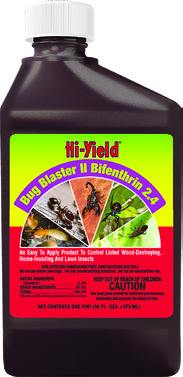
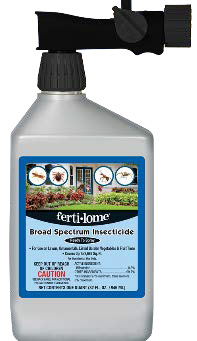
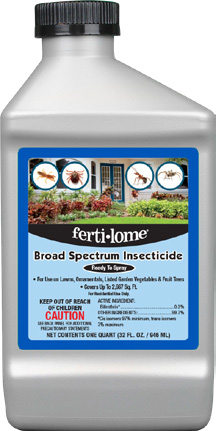
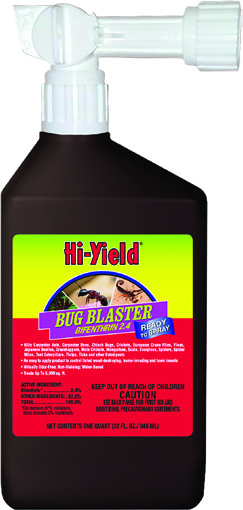
First choice is the active ingredient Bifenthrin, found in both Hi-Yield® Bug Blaster and ferti•lome®
Broad Spectrum Insecticide. The residue from these two allows you to wait 14 days between
applications.
The next choice is Hi-Yield® 38 Plus. This is a good choice for a very quick kill, do make at least 2
applications.
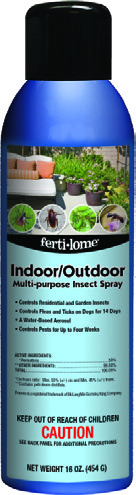
For indoor use ferti•lome® Indoor/Outdoor Multi-purpose Aerosol Spray, would be the best
choice. This non-staining insecticide can be sprayed around windows, doors and anywhere the ALB are
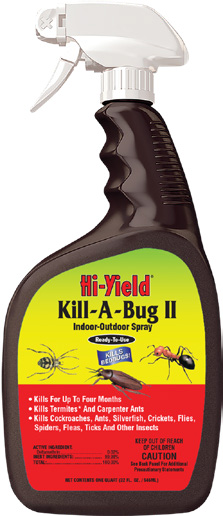
found. Hi-Yield® Kill-a-Bug II RTU is another choice for indoor use and leaves a longer residue.
One last thing about ALB, they secrete a foul-smelling liquid when handled, so only handle them when
they are dead. Ohio State University recommends rigging your vacuum with a nylon stocking to avoid
having to touch them (Image 5).